
主题
科研绘图:用真实数据作图,或把研究内容画成示意图
在菜单「研究工具 → 科研绘图」中,选择数据图表或科研示意图。数据图表读取你上传的数据;示意图根据研究描述表达概念、结构与关系。
用真实数据生成图表
上传 CSV 或 Excel,选择图型并核对列映射,再生成图片。数据画像和推荐帮助你判断哪些列适合当前图型。可下载 PNG、SVG 或 PDF,也可以选择适合黑白印刷的风格。
数字、坐标、误差范围来自真实数据。示意图入口用于概念表达,不能替代这类数据作图。
从研究内容生成示意图
- 选择图片用途,例如图形摘要、技术路线、机制/通路、系统/模型或实验装置。
- 填写研究内容:要出现的对象、它们之间的关系、过程顺序以及希望读者理解的重点。可上传草图或风格参考;修改现有图片时选择对应材料入口。
- 先生成视觉方案,核对后再确认出图。方案准备阶段不会生成图片;确认才开始图片生成并使用当日图片额度。
图形摘要适合突出一个主要结论。复杂机制和系统架构可以保留更多内部模块、并行分支与局部细节。细节应来自研究内容,描述中没有的实体、结论或实验结果不应靠图片补出。
确认方案时看什么
先看主要分区和阅读顺序,再按需展开以下部分:
- 内部实体与子模块:名称是否准确、科学含义是否正确、形态与相对位置是否合理。
- 连接关系:起点和终点是否正确;流程、激活、抑制、运输、反馈、配位和氢键是否区分清楚。抑制不应画成激活箭头。
- 局部放大:来源是不是需要解释的对象,放大的内容是否有依据。放大引线只说明局部细节,不代表因果关系。
- 统一颜色与符号:同类对象是否使用一致的颜色和形状,不同科学关系是否容易辨认。
你可以改标签、描述、关系和颜色。删除对象会一起清理依赖它的连接与放大图;改动后需要重新核对方案。确认后的内部标签会随方案保留。
生成方案以你的研究描述为依据,保留内部模块、局部细节与术语变体。确认前请以研究材料为准核对;模型仍可能遗漏对象、误解关系或翻译不准。
出图后的核对与修改
放大图片检查标签拼写、实体是否遗漏、箭头方向和科学含义。再按实际论文版面查看缩小后的可读性;复杂图需要足够的版面宽度。
如果只需修改一个细节,可以填写一句修改要求生成新版本,例如「把右侧连接改为抑制线,其余标签与布局保持不变」。历史版本可以继续查看和下载。
PNG 可直接下载;PPTX 中图片仍是整体位图,标题和图注文字可编辑。来自已完成研究的配图可在核对图注后插入论文新版本,原论文版本保留。
输入与输出案例
下面九个案例对应页面类型卡的悬停样例。每例都给出完整可复制文本、绘图选项与实际生成图片;点击图片可以查看大图。样例使用英文标签。如需同样的英文标签,请先将界面语言切换为英文,再输入以下文本;中文界面默认请求中文标签。你也可以根据自己的研究材料改写内容。
共同选项:文字描述生成、风格 简洁矢量、画幅 16:9,不上传参考图。这里的“简洁矢量”是视觉风格名称,下载结果为 PNG。复制文本后先生成视觉方案,核对内部对象、标签和关系,再确认出图。
这些展示样例经人工核对视觉方案、整理绘图说明后生成,系统图沿用已选定的实图。它们用于参考输入写法与视觉风格,直接复制文本走默认生成流程不保证得到相同结构或图片。图片仍可能存在错字、遗漏和关系误画,下面列出各例应重点检查的内容。
从序列到候选:蛋白筛选图形摘要
绘图选项: 图片用途「图形摘要」,领域「计算机 / AI」。
输入文本:
text
A qualitative graphical abstract of a proposed protein screening workflow, not measured evidence. Left: a Protein Sequence Library shown as several short sequence strips. Center: a Sequence Encoder contains Token Embedding and Feature Pooling; its output enters a Candidate Ranker containing Property Score and Diversity Filter. Right: Selected Candidates appear as three distinct generic folded protein silhouettes, followed by a Planned Validation flask icon. Group the main route into Input, Representation and Selection. Show a small Feature Representation detail connected to Feature Pooling by a non-causal zoom tether. No named proteins, numeric scores, measured benefits or claim of successful validation.实际输出:
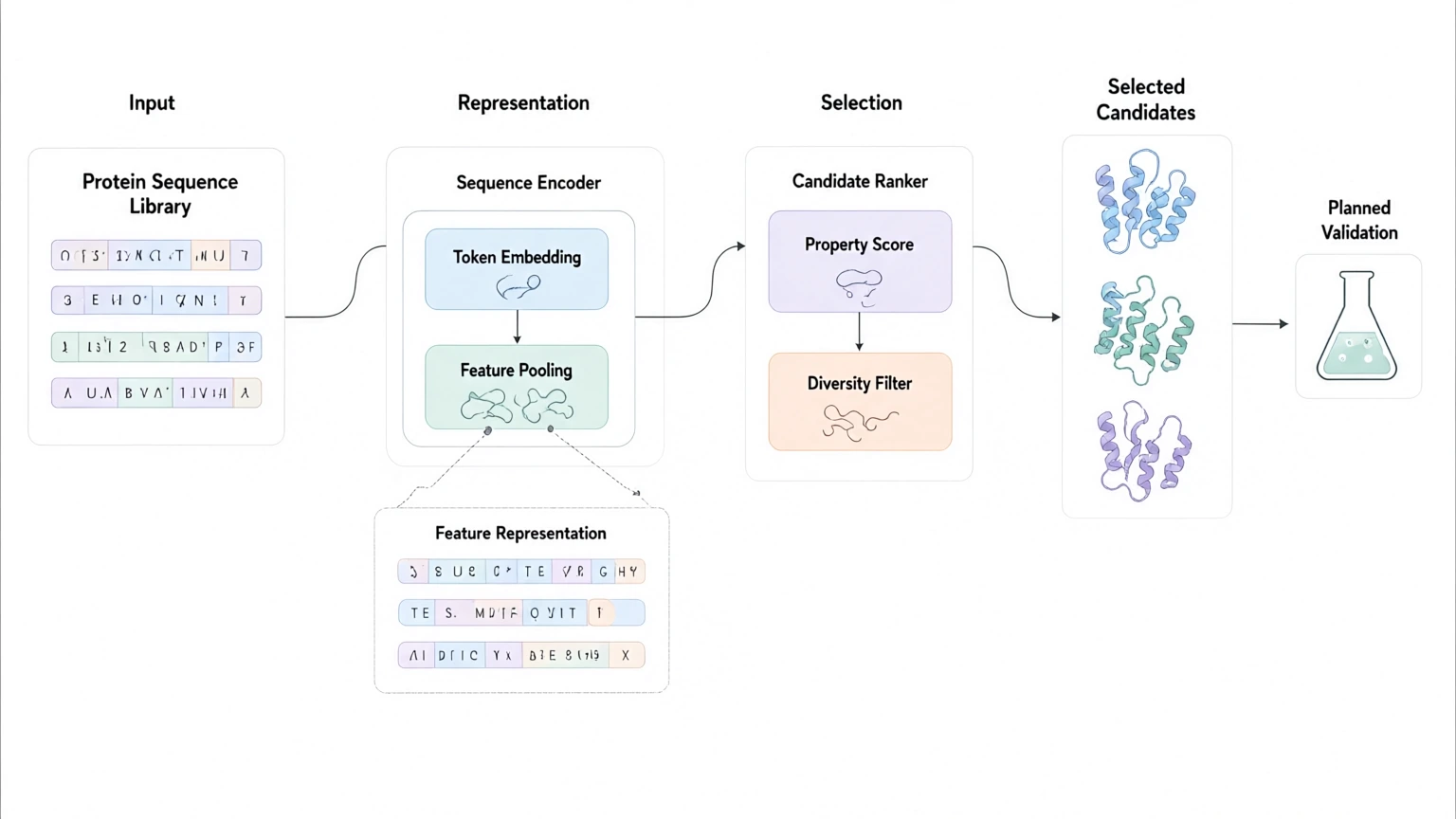
序列条带、编码器内部模块、筛选分支、候选蛋白与计划验证构成完整阅读路线。
重点核对: 检查图中是否把“计划验证”误画成已完成的实验;不要把候选示意当作实际筛选结果。
序列分析:带复核反馈的技术路线
绘图选项: 图片用途「技术路线」,领域「计算机 / AI」。
输入文本:
text
A qualitative sequence-analysis workflow, not an experimental result. Sequence Records pass through Input Checks containing Format Validation and Duplicate Removal. Curated Sequences enter Representation containing Tokenization and Embedding. Representations enter Candidate Selection containing Scoring and Diversity Review. Selected Candidates enter Planned Validation containing Assay Design and Review Criteria, ending at a Candidate Report. Draw the four main stages left to right with clearly nested submodules and small sequence strips. A separate Manual Review branch takes Candidate Report and returns corrections to Input Checks. No numeric results, named models or efficacy claims.实际输出:
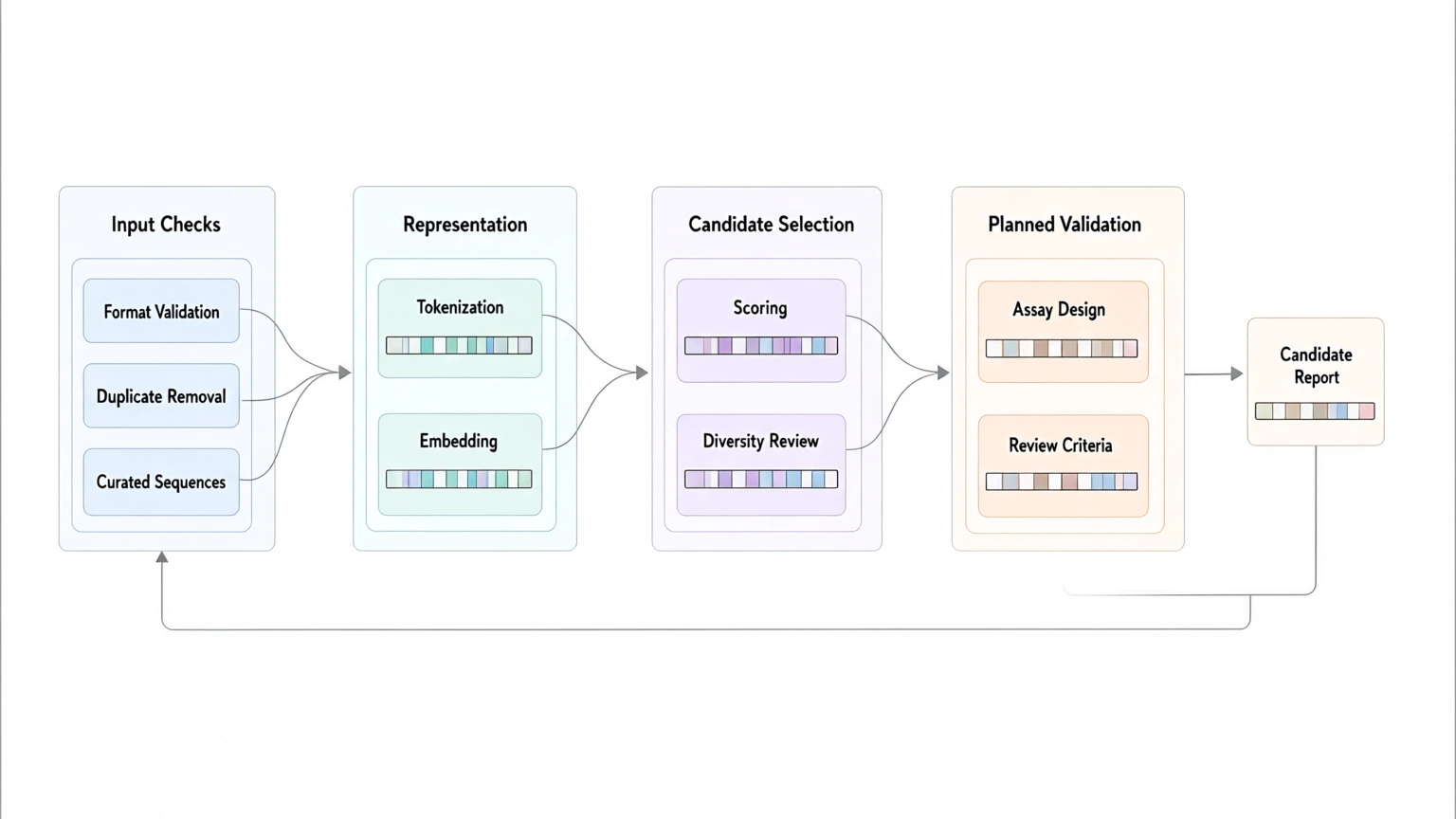
四个主要阶段含内部步骤,复核分支返回输入检查,帮助解释流程与反馈。
重点核对: 本图的 Manual Review 标签没有清楚呈现,内部步骤也需要核对顺序。检查主路线、反馈终点以及各阶段是否遗漏;反馈线不能替代主路线。
受体信号:激活、抑制与入核
绘图选项: 图片用途「机制 / 通路」,领域「生物 / 医学」。
输入文本:
text
A conceptual receptor signaling mechanism, not experimental evidence. Arrange Extracellular Space above a horizontal Cell Membrane, with Cytoplasm below and a Nucleus at the right. One Ligand binds one transmembrane Receptor. Inside the cytoplasm, Receptor activates Kinase A, Kinase A activates Kinase B, and Kinase B activates Transcription Factor. The factor moves through Nuclear Pore into Nucleus and activates Target Gene. One Kinase Inhibitor inhibits Kinase B using a blunt inhibition bar. One Negative Regulator sends negative feedback to Receptor using a blunt-ended line. A small Receptor Binding inset enlarges the ligand-receptor contact using a non-causal dashed tether. Keep each named actor unique. No named proteins, phosphorylation marks, medical claims, numeric measurements or extra pathways.实际输出:
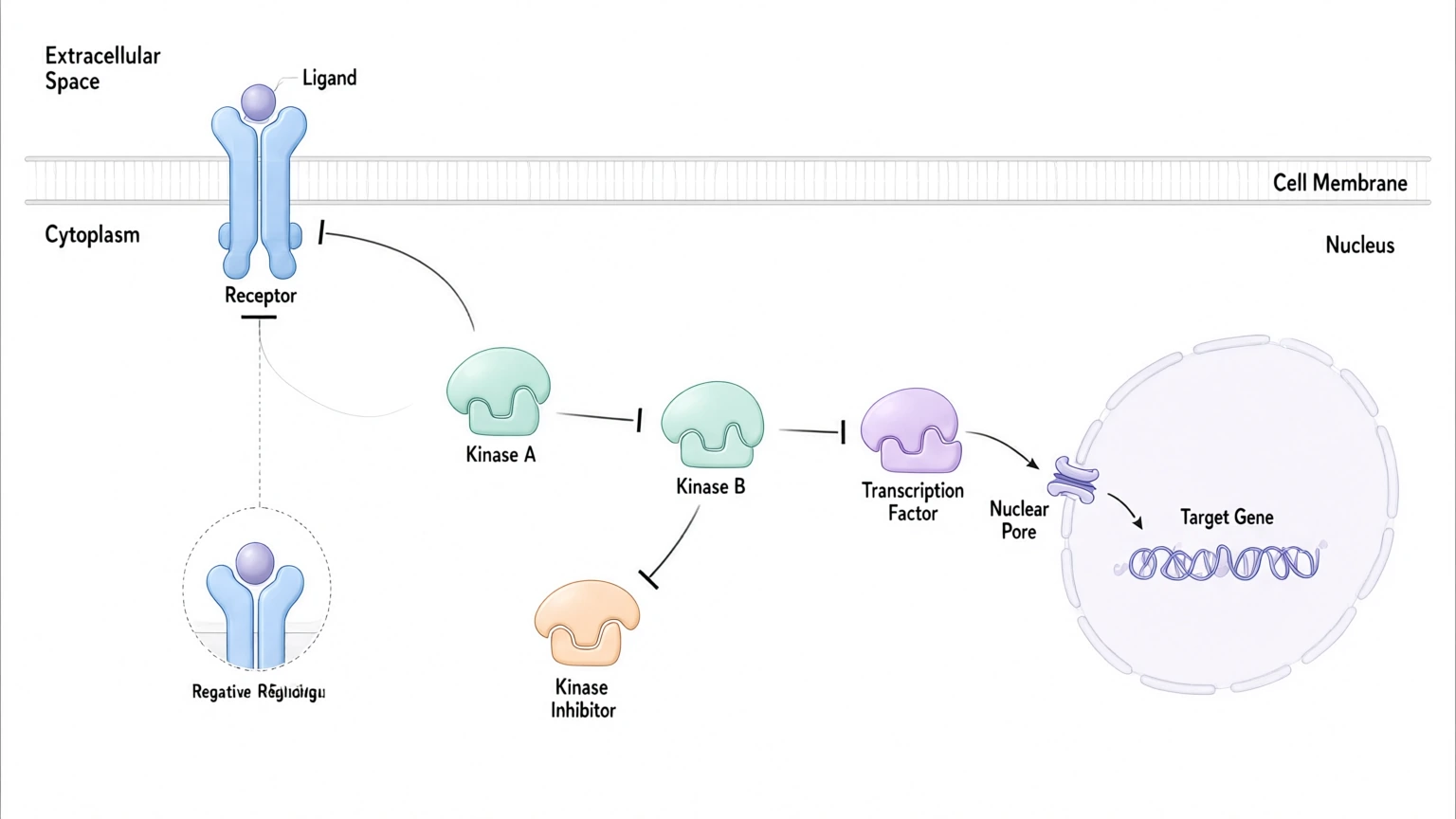
胞外、细胞膜、胞质与细胞核提供空间背景;受体级联、抑制和结合放大共同解释机制。
重点核对: 这张实际草稿把部分激活链误画成横杠,结合放大的标签也需要修订。应先把 Receptor → Kinase A → Kinase B → Transcription Factor 改成激活箭头,再检查抑制剂指向 Kinase B、入核和反馈关系;不能直接照此图解释机制。
编码器—解码器与注意力局部细节
绘图选项: 图片用途「系统 / 模型」,领域「计算机 / AI」。
输入文本:
text
A qualitative encoder-decoder sequence model. Input Tokens enter Token Embedding; Positional Encoding is added to the embeddings. The Encoder contains Self-Attention, Add & Norm, Feed Forward, and a second Add & Norm, with residual skip paths around attention and feed-forward. Its Encoded State enters Cross-Attention in the Decoder. The Decoder receives Shifted Output Tokens, followed by Masked Self-Attention, Add & Norm, Cross-Attention, Add & Norm, Feed Forward, and Add & Norm. Decoder output passes through Linear + Softmax to Predicted Tokens. A local attention detail has Q, K and V entering Scaled Dot-Product Attention and yielding Weighted Values; parallel attention heads join through Concat + Linear. This is an explanatory architecture, with no measured performance or training data.实际输出:
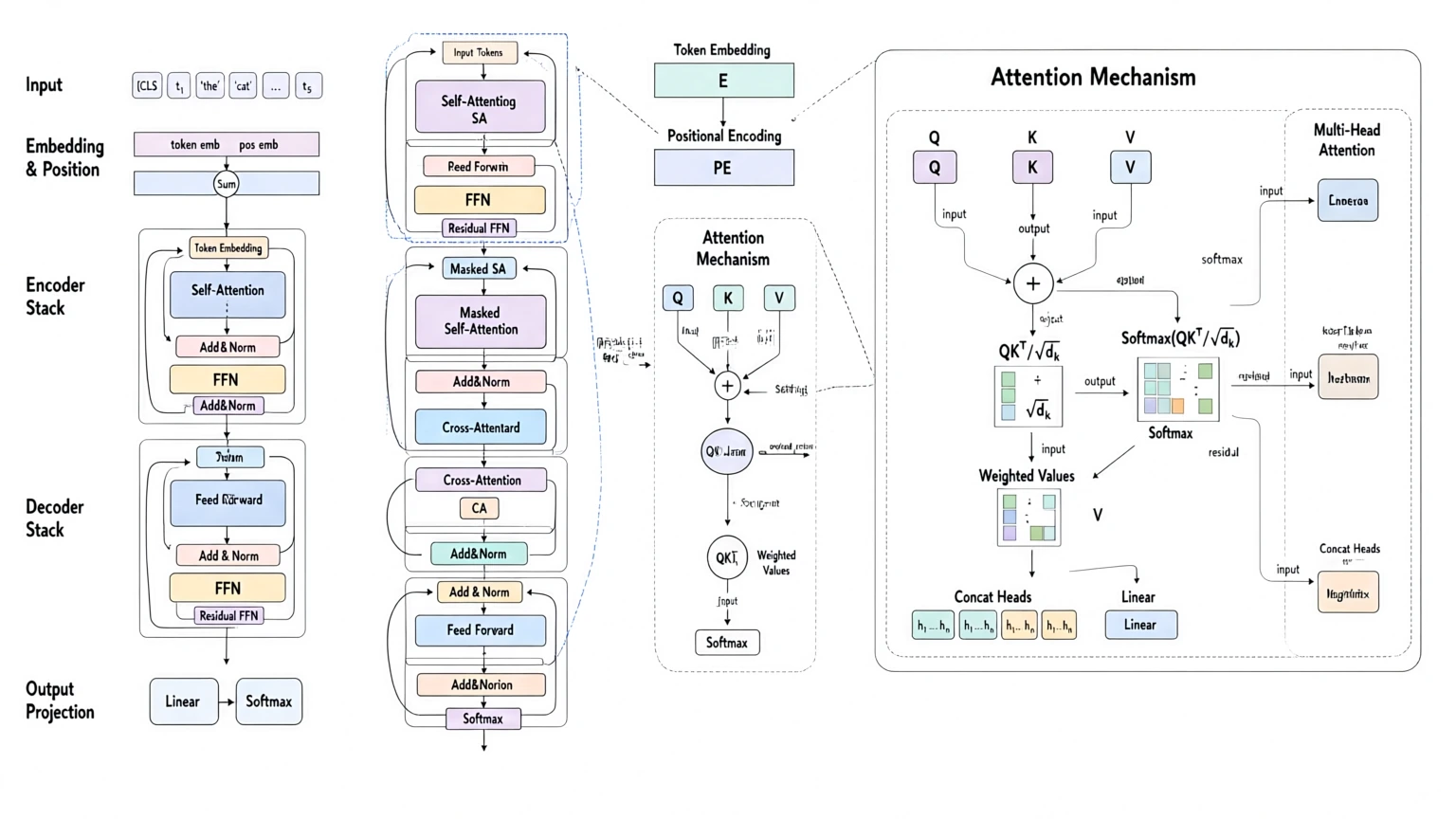
多层编码器与解码器堆叠、残差支路、Q/K/V 和注意力局部面板,呈现你需要的细线与柔和配色风格。
重点核对: 这张实图中仍有标签拼写与连线问题。请核对 Encoder/Decoder 内部层次、Cross-Attention 输入、Q/K/V 和归一化位置;不能直接把它当作架构标准答案。
全连接与局部连接的结构对比
绘图选项: 图片用途「对比图」,领域「计算机 / AI」。
输入文本:
text
A conceptual side-by-side comparison of Dense Connections and Local Connections in a sequence-processing block. Each panel has the same six Input Tokens along the bottom and six Output Tokens above. In the Dense Connections panel every input connects to every output with thin subdued lines. In the Local Connections panel each output connects only to its matching input and immediate neighbors. Add a small Matching Window inset in the local panel showing three adjacent inputs. Use the same token colors, shapes and panel dimensions so connectivity is the only difference. Labels: Dense Connections, Local Connections, Input Tokens, Output Tokens, Matching Window. No performance plots, speedups, accuracy values or claim of superiority.实际输出:
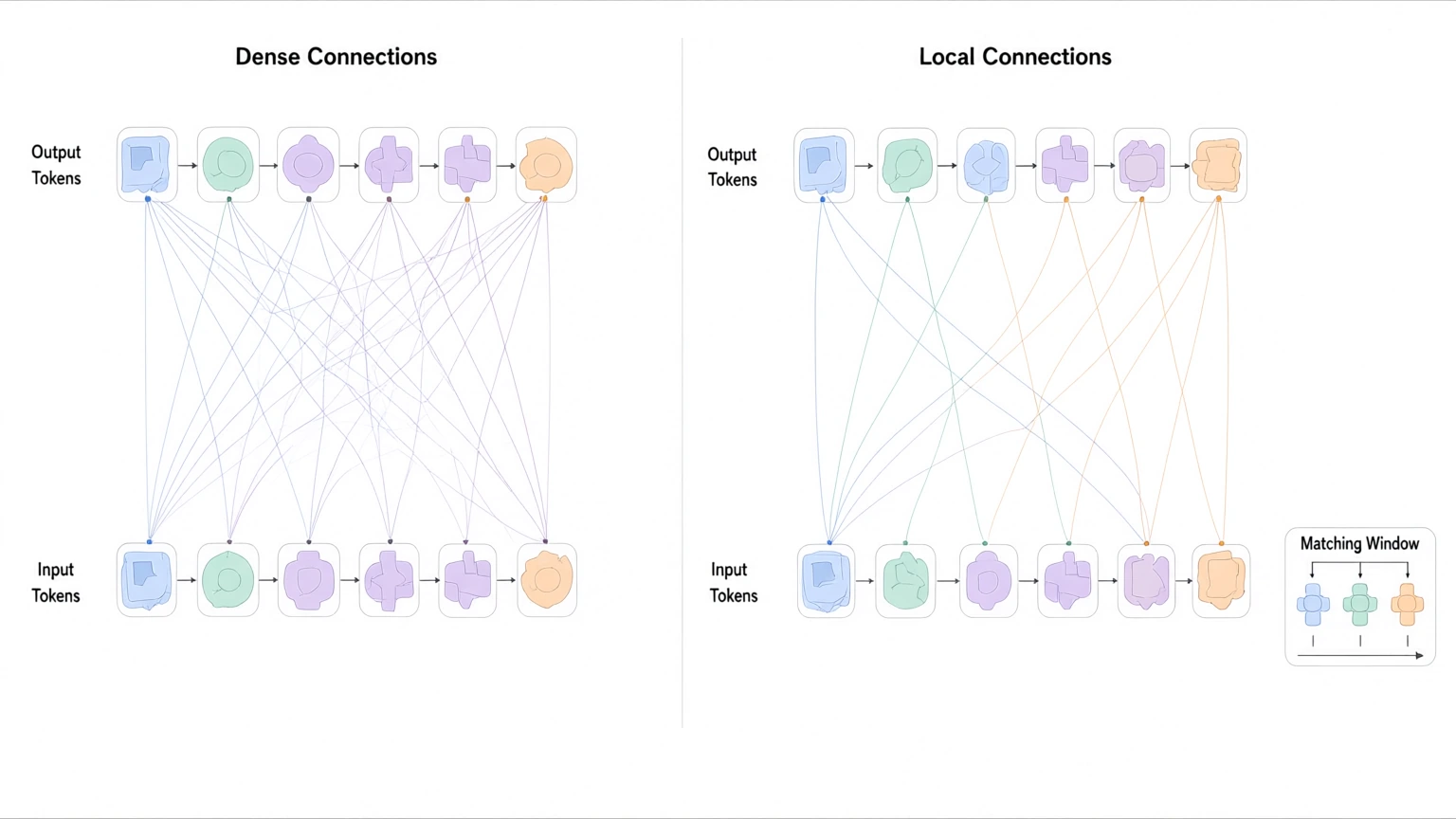
两侧使用一致的输入、输出和颜色,通过连线密度对比全连接与局部窗口。
重点核对: 图中仍有部分跨窗口连线和额外横向箭头,应按输入修订为相邻窗口连接。检查两侧对象数量与对应关系一致;不从示意图推断速度或准确率。
电化学测试:装置与连接关系
绘图选项: 图片用途「实验装置」,领域「材料 / 化学」。
输入文本:
text
A conceptual electrochemical measurement setup, not a photograph or experimental result. A Potentiostat connects separately to Working Electrode, Reference Electrode and Counter Electrode in a transparent generic Electrolyte Cell. Draw the three electrodes clearly separated and immersed in Electrolyte. A Temperature Probe enters the cell but connects only to a separate Temperature Monitor. Use explicit labeled cable routes rather than causal arrows. Add a small Working Electrode Interface inset showing electrode surface and adjacent electrolyte, connected by a non-causal zoom tether. No voltage values, current traces, composition, reaction products or safety certification claims.实际输出:
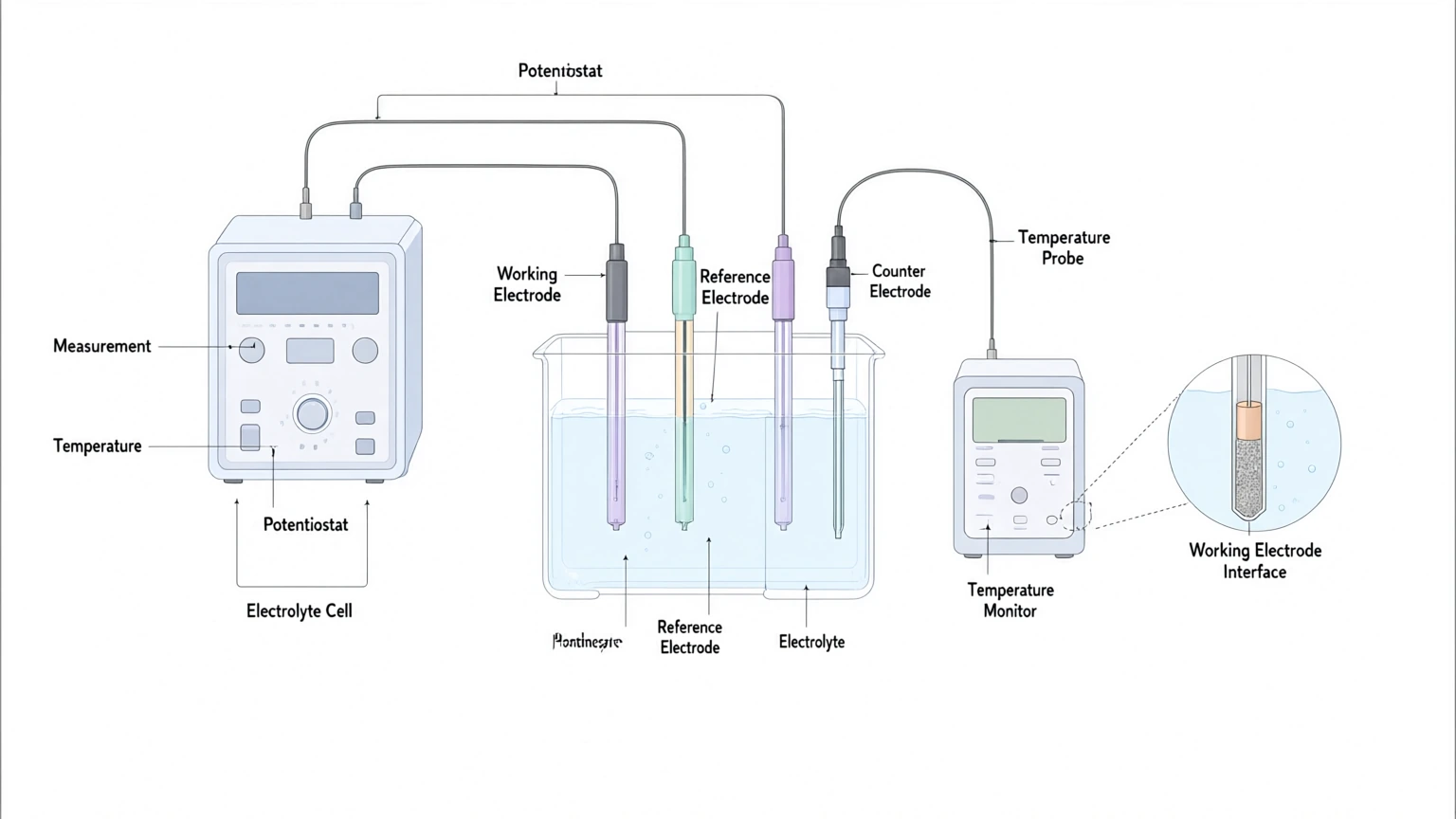
电化学仪器、三种电极、温度监测与电极界面放大展示装置组件及连接关系。
重点核对: 本图部分电极标签与放大引线的位置仍需校正。检查工作、参比、对电极接线和温度探头是否混淆,界面放大应来自工作电极;这是概念装置图,不是可直接执行的实验操作规程。
从准备到报告的实验计划时间线
绘图选项: 图片用途「时间线」,领域「通用科学」。
输入文本:
text
A qualitative experimental planning timeline with five ordered milestones: Preparation, Pilot Check, Main Run, Quality Review, Report. Under Preparation show Protocol Draft and Material Checklist. Under Pilot Check show Trial Setup and Procedure Review. Under Main Run show Sample Handling and Data Capture. Under Quality Review show Completeness Check and Exception Review. Under Report show Methods Summary and Figure Draft. Use a horizontal sequence of milestones with nested two-item cards under each, restrained pastel colors and thin arrows for order. The phases have no assigned dates, equal spacing does not mean equal duration. No measurements, completed-experiment claims or fabricated results.实际输出:
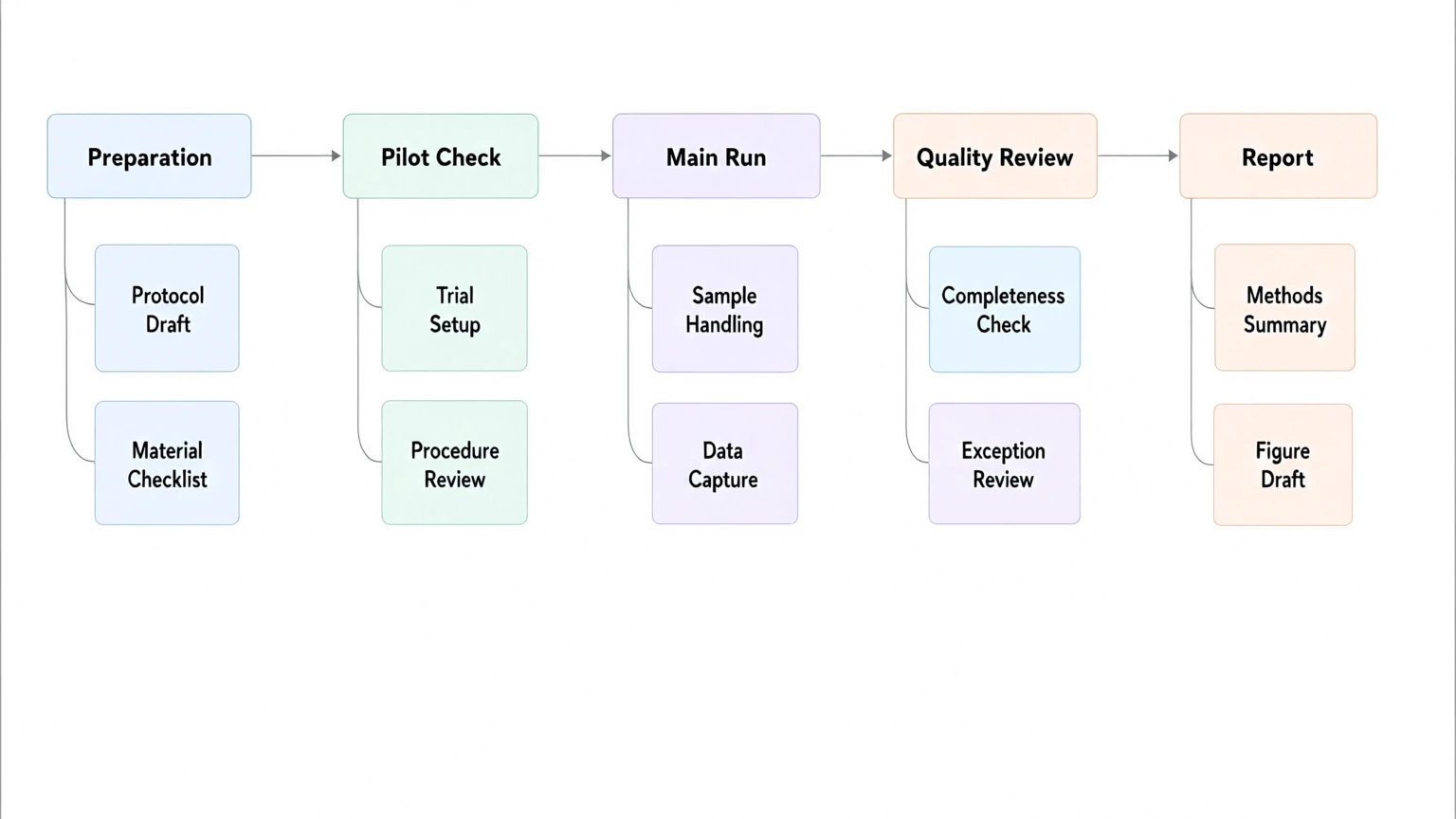
五个有序里程碑配合内部子步骤,适合解释实验计划的推进顺序。
重点核对: 未输入具体日期与持续时间,因此节点间距不表示真实耗时,也不代表实验已完成。
多模态分析系统的概念关系图
绘图选项: 图片用途「概念关系」,领域「计算机 / AI」。
输入文本:
text
A conceptual map centered on Multimodal Analysis. Four surrounding branches are Input Modalities, Representation, Integration and Review. Input Modalities contains Text, Images and Tables. Representation contains Text Features, Image Features and Table Features. Integration contains Alignment and Fusion. Review contains Source Check and Human Review. Use undirected association lines from the center to the four branches and from branches to their children; these lines indicate membership, not causation. Show a compact nested group for each branch with consistent colors. No named models, numeric results, performance claims or extra modalities.实际输出:
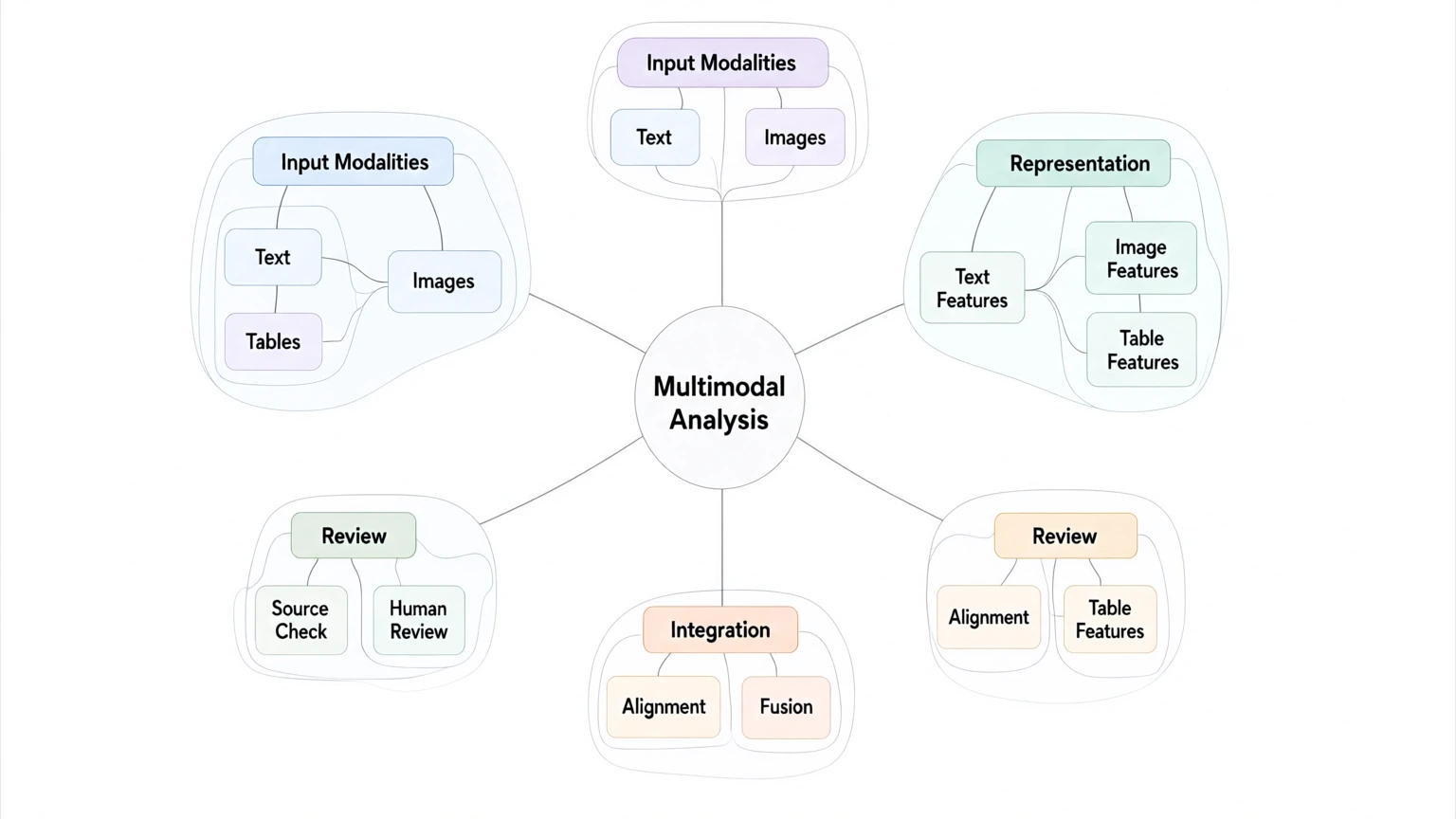
以多模态分析为中心,围绕输入、表示、整合与复核展开多层概念分组。
重点核对: 本图多画了重复的输入与复核分组,应合并重复内容。连接表示成员和关联关系,不能读成因果箭头;检查父子分组是否准确。
离子传输概念的封面视觉
绘图选项: 图片用途「封面图」,领域「材料 / 化学」。
输入文本:
text
A conceptual research cover illustration of ion transport through a porous material, not experimental evidence. Show a cutaway porous membrane with interconnected curved channels, soft blue material walls and small warm-colored spherical ions distributed along the channels. A few thin curved arrows indicate a single left-to-right transport direction. At the right show a simple flat receiving surface with no reaction or named chemistry. Use a white background, delicate scientific outlines and soft pastel blue, mint and peach with restrained depth shading. The visual communicates porous pathways and transport, not a measured advantage. No visible text, chemical formulas, charts, photomicrographs or numerical data.实际输出:
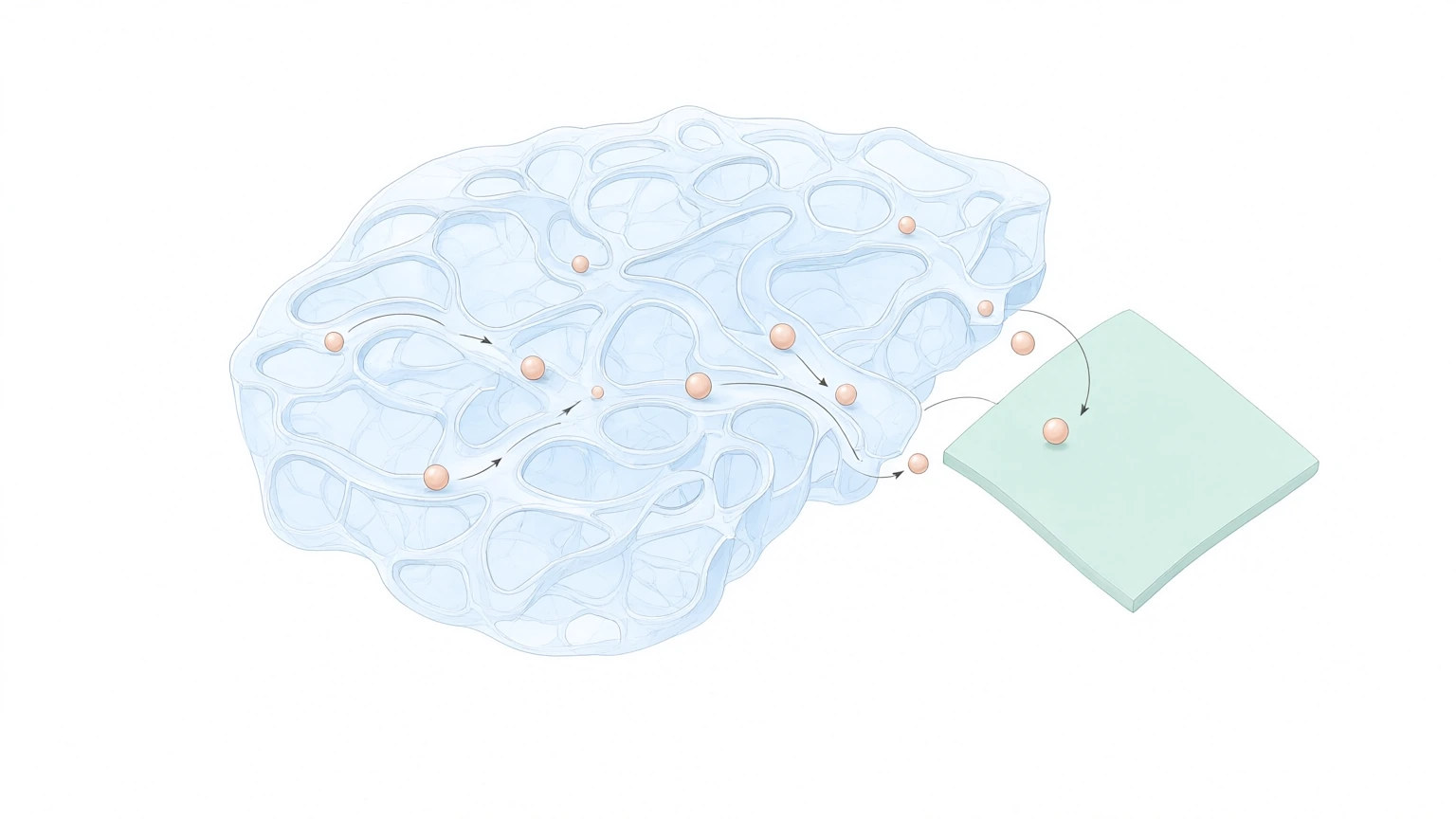
多孔膜切面、连续孔道、离子与传输箭头构成不含数据的封面概念视觉。
重点核对: 核对孔道连续性与传输方向;不把装饰性球体、颜色和空间分布当作实际材料结构或成像证据。
这类图片的使用边界
科研示意图是 AI 辅助生成的概念草稿,需要研究者检查。不能将它当作显微图、凝胶图、医学影像或其它实验原始证据;生成后的科学关系也不能仅凭视觉效果认定正确。投稿前按目标期刊要求处理 AI 图片与声明。
学术海报
示意图类型列表也提供「学术海报」入口,可将论文或研究内容整理为 3–6 个分区,生成 A0/A1 的可编辑 PPT、打印 PDF 和预览 PNG。完整输入、选项与输出案例见学术海报指南。